
Rogue Empire
I think I've seen this film before, and I didn't like the ending

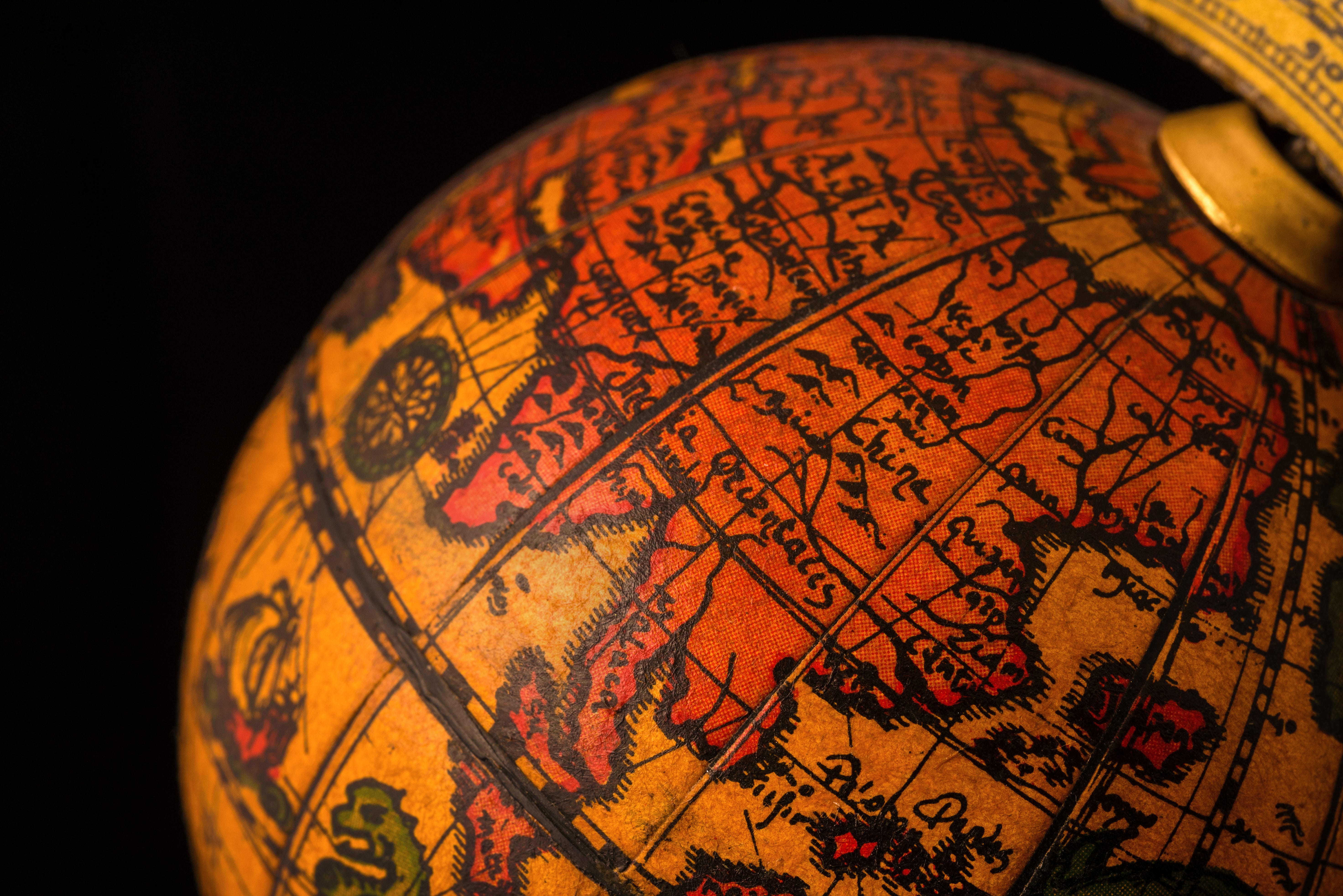
Back in the George W. Bush administration, we saw the rise of the term “rogue state.” The phrase was used to describe a group of nations that had stepped outside the guardrails of diplomacy, decorum, and international law. Since the Bush administration, the definition of rogue state has been determined exclusively by the US government.
Historically, the definition has sought to include countries that support terrorism, or that use weapons of mass destruction, or that maintain stockpiles of such weapons. The first countries to be considered rogue states were North Korea, Cuba, Iran, Iraq and Libya. Currently, the list of rogue states consists of Afghanistan, Cuba, Iran, Nicaragua, North Korea, Sudan, Syria, and Venezuela (though Venezuela’s status may be changing as a result of recent US misadventures there).
In 2000, the Clinton administration tried to distance itself from use of the term “rogue state,” suggesting instead that we shift to calling these nation “states of concern.” Nevertheless, the language persists. It persists, at least, until the current president expressed his preference for simply calling some nations “shithole countries.”
2.
Meanwhile, we Americans look around and realize we have an empire. It is perhaps the last standing empire from the long 20th century, a period that saw both the zenith and nadir of the imperial age. As such, the United States had the advantage of seeing every mistake and every atrocity committed by previous global regimes. Such a wealth of data, combined with the ingenuity and audacity Americans have had in taking on huge and difficult endeavors, might have given us an opportunity to learn from these mistakes and not repeat them.
We learned nothing.
Every empire always imagines that is will be the last. Simultaneously, each new empire imagines that it will be just like the first. In both respects, each empire is always wrong.
The aspiring empire is wrong to imagine its permanence and longevity because, if we know anything in the present age, we know that empires are built on hubris and little more. They are relatively short-lived in the modern age, as the ideologies that favor their existence are largely eclipsed, having been supplanted by emancipatory, nativist, and individualist narratives.
The new empire is also wrong to imagine its symmetry with the Roman empire, which was certainly not the first empire, but holds pride of place in the collective imagination as the longest, the strongest, and the best of all imperial realities.
We imagine that we are like the Romans. Like them, we find ourselves for a season astride the world. Like them, we have severe problems of crowd control. Like them, we have many crucifixions.
3.
Do I need to mention that the United States maintains a stockpile of weapons of mass destruction? Must I point out that the government of the United States, through their street-level agents, are increasingly deploying and using these weapons of mass destruction against our own civilian population? Tear gas, certainly, and rubber bullets as well. These have long been part of the arsenal of our militarized police forces.
Now, however, we also see the rise of so-called Long-Range Acoustic Devices (LRADs), which can be used on crowds to induce dispersal through discomfort, nausea, and disorientation. LRADs are promoted to the public as so-called “non-lethal” weapons, but we should be clear that these devices have been shown to cause permanent hearing loss. Exposure to the frequencies they create can affect the delicate parts of the inner ear, leading to permanent vertigo and other balance issues.
We should also be clear that all forms of these so-called “non-lethal” or “less-lethal” weapons have always had the potential to create permanent damage. Exposure to tear gas has been shown to cause damage to chromosomes. Rubber bullets break bones and blind people. Even tactics of crowd control, such as “kettling,” threaten to cause severe indirect damage in cases where people are crushed or trampled as a result of these police actions.
We might ask what, then, distinguishes the United States from the rogue states we label and condemn. On the one hand, we must admit that there seems to be little or no difference at the level of what we do, at home and abroad. On the other hand, there seems to be a world of difference, based in the simple recognition of our current status in the world.
We are not a rogue state in large part because we are not just a state. We are instead a rogue empire.
4.
Jasbir K. Puar, in her book, The Right to Maim: Debility, Capacity, Disability, observes that
[Michel] Foucault writes, “The [old] right of sovereignty was the right to take life or let live. And then this new right is established: the right to make live and to let die.” Foucault notes that sovereignty’s old right was not replaced but rather was complemented by this new right, “which …. penetrate[s] it, permeate[s] it” [139].
Puar is developing a theoretical structure that builds off of the complications introduced here by Foucault. Beyond the control of life that says “I can make you die” (the original power of the sovereign) and “I can control your life” (the disciplinary constructs that Foucault classifies under his rubric of “biopower”), Puar introduces a nuanced concept: the right to maim.
This “right” of a state to exact a certain form of violence is complex precisely because, on the surface, it is presented as an alternative to sovereign violence. To wit: If we all assume that the state acts in an extreme or obscene manner when it indiscriminately kills, then must we not praise the state (and state actors) when it chooses instead to show restraint, choosing to permanently injure rather than kill? In this shadow play, the maiming action of the state can be presented as the humanitarian alternative to simple extrajudicial execution.
As Puar puts it,
Maiming thus functions not as an incomplete death or an accidental assault on life, but as the end goal in the dual production of permanent disability via the infliction of harm and the attrition of the life support systems that might allow populations to heal from this harm. Maiming is required. Not merely a by-product of war, of war’s collateral damage, it is used to achieve the tactical aims of settler colonialism [143, my emphasis].
To be an empire, one likely must have colonies. To maintain those colonies in the twenty-first century might require different tactics than those that were used in the previous century. Instead of outright killing, or highly visible forms of violence, the new regimes of control simply find a way to sow terror in the subject populations through well placed acts of debilitation.
5.
Do I need to draw out the parallels? In the state of Florida, Republican lawmakers have advanced a bill to weaken vaccine protections for children. This bill, however, apparently falls short of the goal of the Florida Surgeon General, who wishes to end childhood immunization programs altogether. The Republicans call this “freedom,” but perhaps we know better.
As a great sage once said, “I think I’ve seen this film before, and I didn’t like the ending.” Perhaps we who still have some sense of history can see how these things return: the children with lifelong scars, with lingering weakness, unto paralysis. The lucky ones, we say, the ones who survived.
Our empire is not firing indiscriminately into crowds. At least not yet. But we have chosen more and more the path of debility. Our government asserts again and again the sovereign right to maim: to maim our communities, to maim our children, to maim our sense of hope itself.
6.
My dear friend Alec, who is an anthropologist, made an observation to me, many years ago, that has stuck with me to this very day. Alec told me that each year, a large number of people die from choking. That is, they die because they are sitting at a table with other people, often people they love and are loved by, and they begin to choke. But they don’t want to cause a stir, they don’t want to raise a fuss, so they sit in silence, choking to death, until it is too late to save them.
In other words, Alec said, they die of politeness.
I fear we are all sitting together at the table now, and for many of us, the tightness in our throats has just begun. And too many of us are trying to figure out how not to make a fuss, as if the fuss could be the worst thing that could possibly happen.
Trust me, beloved, much worse can happen, and is already happening.
7.
It didn’t have to be this way, and it doesn’t have to be this way.
I think of Nemik’s Manifesto, from Andor, where he says, “The Imperial need for control is so desperate because it is so unnatural. Tyranny requires constant effort. It breaks, it leaks. Authority is brittle. Oppression is the mask of fear.”
All around you at the table, your loved ones are choking in silence, too polite to make a fuss.
Help them to breathe again.
Help them live.
I can put women in their place. I can control your children's minds. I can declare biological fact and racial hierarchy - and thus your existence or non-existence, your right to be here or not. I can declare primacy for one religion and interpret its texts to support my right to power and to suppress all dissent. I can assert all my efforts as righteous ones, representing freedom, love of country, and duty to God. Choking is an apt metaphor. As is drowning. Thank you.