
"Maybe the bigots are okay"
Matthew Vines and the dread of agency

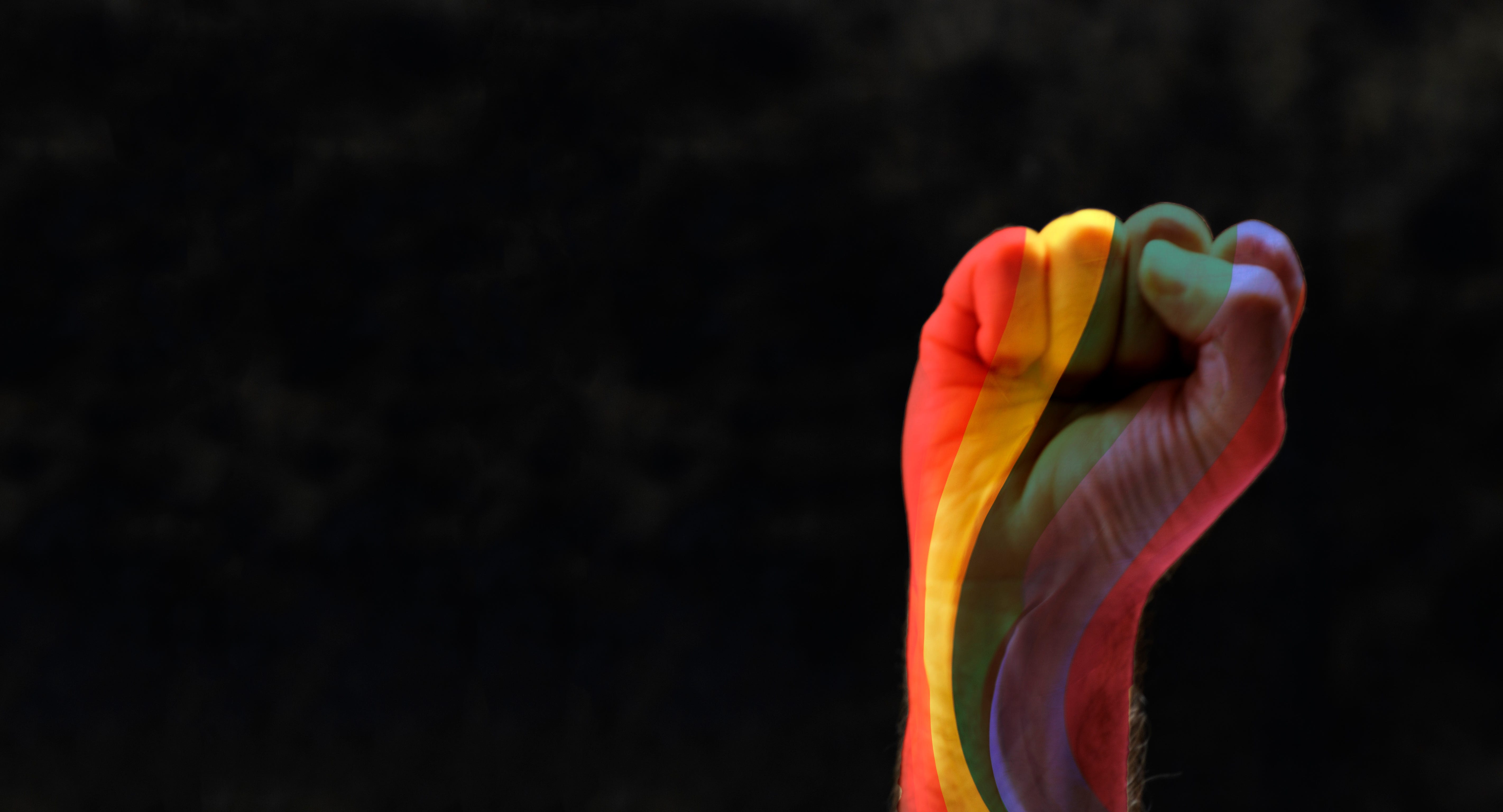
I’m late to the party, and admittedly, it’s not much of a party. More like a weird escape room type of thing.
Last week, Matthew Vines—author of God and the Gay Christian: The Biblical Case in Support of Same-Sex Relationships—was granted a bully pulpit by the New York Times. He used this opportunity to throw a lot of LGBTQIA+ persons under the bus.
Mr. Vines laments that the right for gays and lesbians to marry was only recently won, and now it seems to be under fresh attack by conservatives and others on the right who prefer social structures of exclusion and violence rather than structures of inclusion and civilization.
“This is in part,” Vines writes, “because a key message behind it — that being gay is not a choice — is being undermined by those who argue that same-sex orientation is better thought of as a part of a wider rebellion against social norms.”
Vines places the blame for all this undermining and rebelling squarely on the shoulders of “the queers.” He begins by tracing some of the history:
What’s in a word? It’s more than just a shift in linguistic fashion. “Queer” carries an adversarial charge that “gay” does not, and that charge has a specific intellectual lineage. In 1990 an activist group called Queer Nation published a manifesto exhorting gay people to call themselves “queer.” Its rationale was that “gay” was “a much brighter word” and that “queer” better conveyed the anger and disgust they felt at how society treated gay people: as marginal others whose deaths barely mattered. That sentiment had an understandable resonance at the height of the AIDS epidemic, but the us-versus-them posture it represented has outlived that crisis.
He’s correct that Queer Nation is often credited with the campaign to reclaim the word “Queer” as a positive and ferocious identifier. I encourage you to read their entire manifesto on the subject, “Queers Read This.” In it, the writers from Queer Nation lay out the case that the violence against LGBTQIA+ people is targeted, intersectional, and relentless. The thesis of the manifesto is that there is ultimately nothing that can be done to make oneself acceptable in a society run by bigots, because it is a society run by bigots. The goal is not “acceptability” in a bigoted, violent society. The goal is to transform society away from bigotry and violence. “I hate having to convice straight people that lesbians and gays live in a war zone,” the anonymous writer writes, “that we’re surrounded by bomb blasts only we seem to hear, that our bodies and souls are heaped high, dead from fright or bashed or raped, dying of grief or disease, stripped of our personhood.” Until that changes, the manifesto asserts, straights need to shut up about Queer behavior and learn to listen.
Mr. Vines is not having any of that, however. He is not here to listen. He is here to instruct.
Vines moves from the Queer Nation manifesto to also blaming academics who have been involved in the scholarly discipline known as Queer Studies, and the critical cross-disciplinary project known as queer theory. As he puts it,
This oppositional framing of “queer” achieved its most enduring influence through the rise of queer theory. In that academic context, “queer” did not simply mean “gay or bisexual.” It meant “anti-normative” in a sweeping sense. As the queer theorist David Halperin wrote, “Queer is by definition whatever is at odds with the normal, the legitimate, the dominant.” By that standard, same-sex relationships could be queer, but so could open marriages, prostitution and public sex, even when heterosexual.
Vines singles out David Halperin, but he could have just as easily called out folks like Judith Butler (a favorite target for these sorts of lowbrow attacks), Jack Halberstam (who openly advocates for “queer failure” as a form of direct opposition to capitalism), and Lee Edelman (who has been characterized—perhaps inappropriately—as an advocate for the most “anti-social” aspects of queer theory). But attacking queer theorists for naming the exclusionary violence and bigotry of straight society is on the order of attacking your doctor for giving you a cancer diagnosis. The one pointing out the problem is not the source of the problem. Why does this even need to be said? Yet here we are.
What Matthew Vines is doing here is basically saying “The bigots are okay.” The problem, as he sees it, is all the folks being attacked by the bigots. If only they weren’t so visible, so public, so alive, then there would be no problems here for the respectable, middle-class homosexuals.
It’s a fantasy, of course, and not a very good one. The problem is not the queers—no matter how flamboyant—and it never has been. The problem is the bigots.
What Matthew Vines seems to be truly afraid of is the possibility that humans have agency. He holds fast to the notion that “sexual identity is not chosen,” and that becomes the basis for his argument that gays and lesbians should be accepted by “normal” society. After all, they just can’t help it.
But the existence of positive and visible queerness troubles this biological argument. The idea that some of us would choose to love in all sorts of “deviant” ways, even if we don’t have to, seems to elicit a sort of terror for Vines, and the bigots who hide behind folks like him.
It’s going to seem like a weird leap, but I go back to the words of Pope Francis, when he spoke to the United Nations in 2015. During his speech, he told the assembly that it was the duty of those with resources to support the agency of everyone - particularly the vulnerable and the oppressed (Pope Francis would often use the term, “those beyond the streetlights”):
To enable these real men and women [and nonbinary persons] to escape from extreme poverty, we must allow them to be dignified agents of their own destiny. Integral human development and the full exercise of human dignity cannot be imposed. They must be built up and allowed to unfold for each individual, for every family, in communion with others, and in a right relationship with all those areas in which human social life develops.
Dignified agency is not a matter of biological imperative. It arises from actual breathing people—Pope Francis used the word real to talk about these men and women and nonbinary persons—making complex choices about their lives, their relationships, and their desires. The Holy Father went on to insist that it is not the place of anyone else to impose their ideas of dignity or agency on others. No matter how “acceptable” we may seem in the eyes of others, we must not imagine we are the gatekeepers of dignity or agency for anyone.
Bigotry always wraps itself in righteousness to hide its self-righteousness. This is the grand bargain that Vines has made, and it’s a Faustian one. Vines wants his “freedom,” but at the cost of sacrificing the freedom of others. That’s not an acceptable solution to the problem we are facing right now. We need solidarity to rout the bigots, not to cape for them.
The anonymous author of “Queers Read This” wrote, “Our difference, our otherness, our uniqueness can either paralyze us or politicize us. Hopefully, the majority of us will not let it kill us.” When Vines says that “being gay is not a rebellion against ordinary life,” he’s just … wrong. One wonders what America, exactly, he’s been living in all this time.
Now, more than ever, we are in need of that loving, deviant rebellion of queerness. We need the eruption of agency and support of dignity like never before. We’re not going to get that from the bigots, I’m afraid, no matter how much we try to make things look “acceptable.” That’s not on us—that’s on them. The bigots are not okay. Queers are.
Thank you David. Appreciate your writing on this.